 EN
EN  IT
IT  FR
FR  DE
DE  ES
ES Millennial Traces of Norba
Megalithic Walls and Ancient Gate
The historic foundations of Conversano, the massive cyclopean walls, and the ancient city gate
The megalithic walls of Conversano, dating back to the Iron Age, are among the oldest testimonies of the city’s past. Built when the settlement was known as Norba, these defensive structures of large stone blocks are still visible in various points of the historic center. They represent a rare example of cyclopean architecture in Apulia.
Next to them survives the memory of the Ancient City Gate, once known as Porta Maggiore, which represented the main entrance to the fortified village.
Today, these elements form one of the main historical attractions of Conversano, offering an exciting journey through archaeology, history, and urban identity.
Norba and the Origins of Conversano
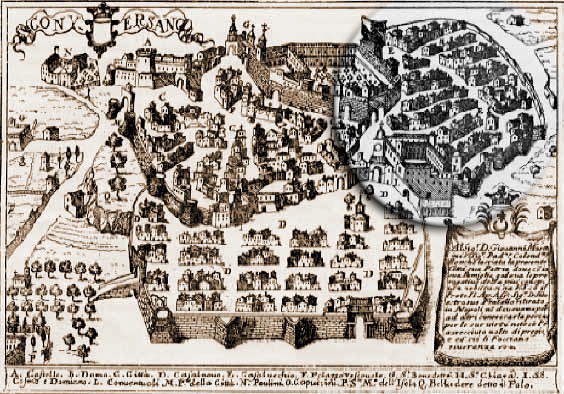
Conversano traces its roots back to the Iron Age, between the 8th and 6th centuries B.C., when it was known as Norba. The term means “settlement enclosed in a circular cavity,” a direct reference to its urban layout protected by walls. Thanks to its strategic position between the coast and the hills, Norba soon became an important cultural and commercial center, as evidenced by the artifacts preserved in the Archaeological Museum of Conversano.
The Megalithic Walls: Protection and Identity
In the 6th century B.C., at the height of its splendor, Norba was equipped with a majestic city wall built with large squared stone blocks, following the cyclopean technique. These megalithic walls still represent today one of the most ancient and fascinating symbols of the city.
Several sections of the walls are still visible in the historic center, integrated into the current urban fabric:
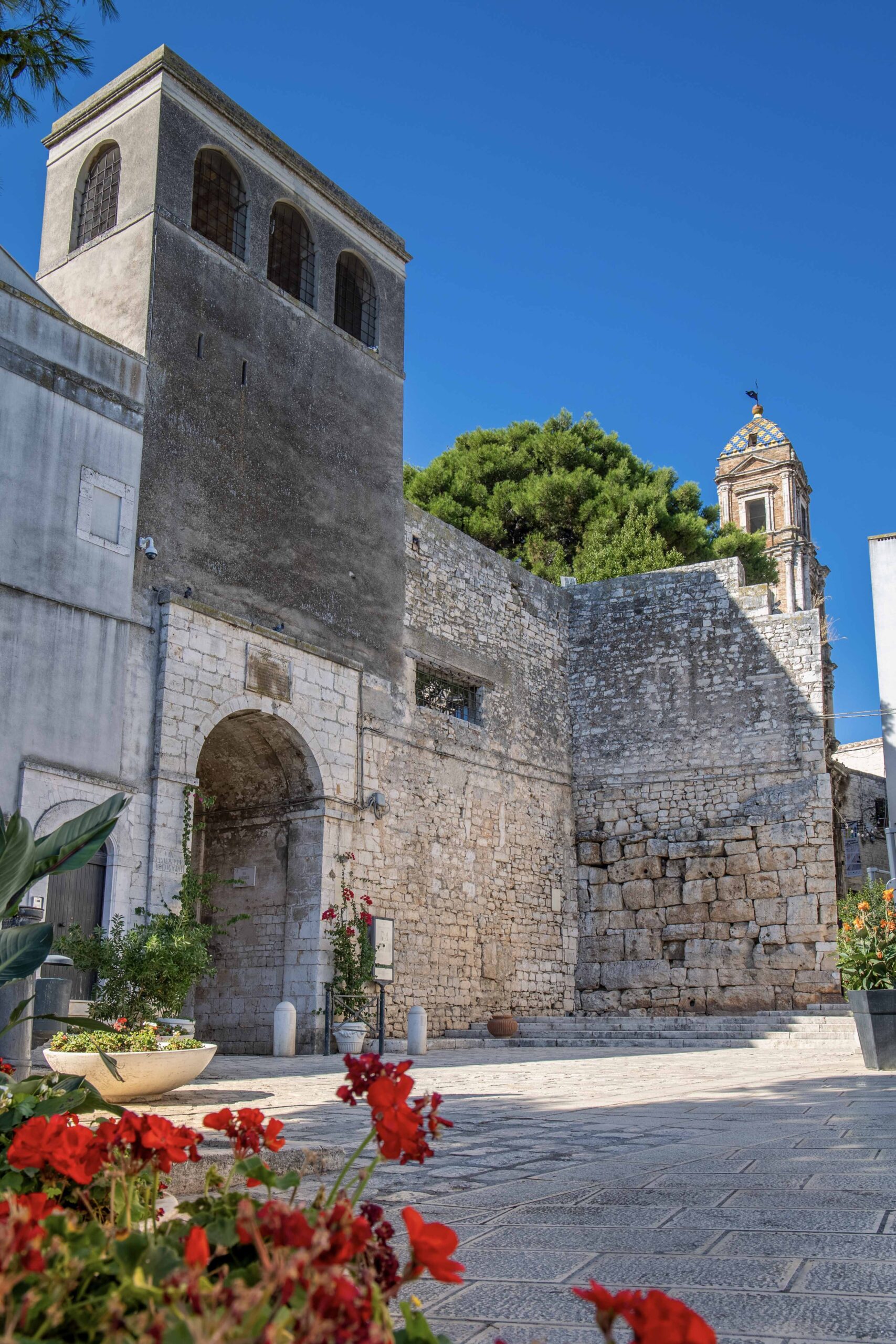
Near the Porta del Lauro (or Tarantina), where the historical stratification is clearly visible: the medieval walls are built upon the more ancient megalithic structures.
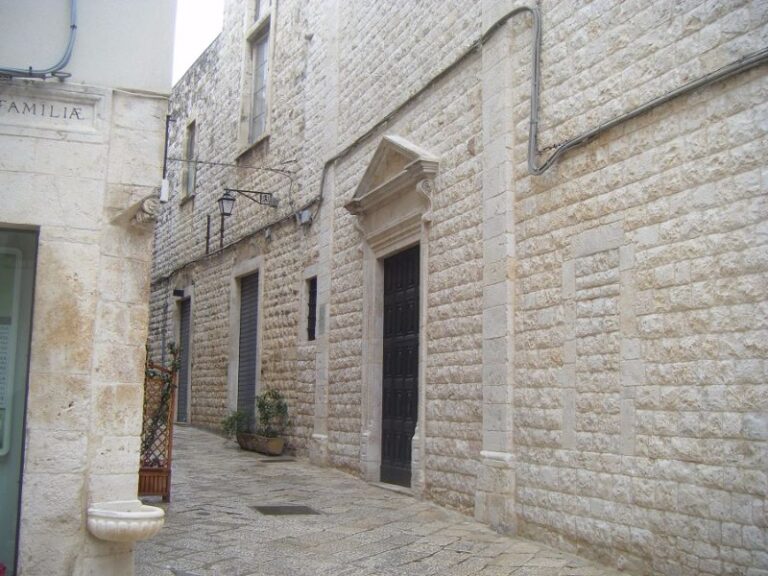
In Vico IV Martucci, a small alley of the old town where the stones emerge among the houses;
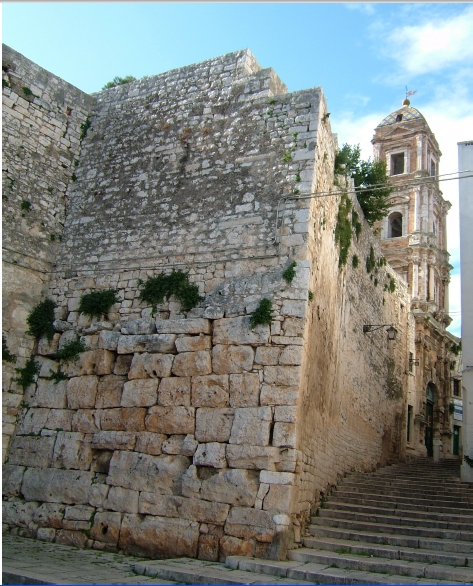
Beneath the Norman Tower of the Aragonese Castle, a testament to architectural continuity through the centuries;
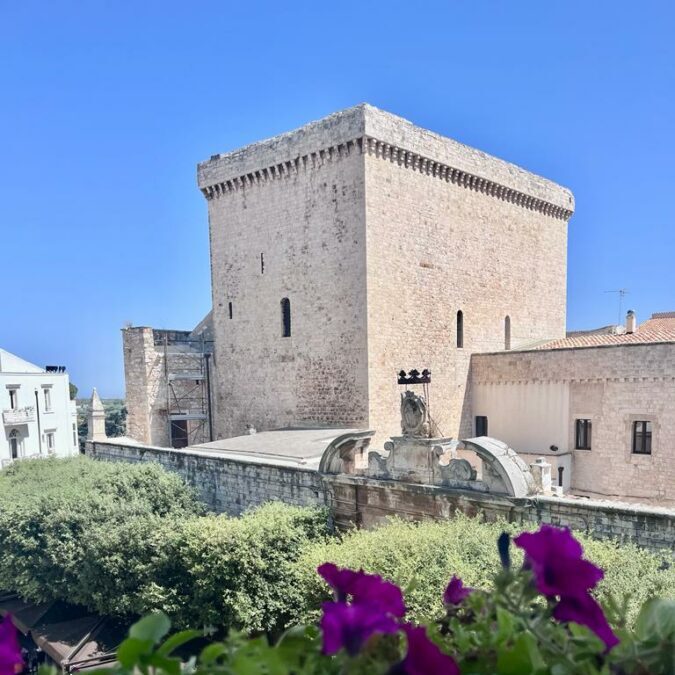
In Piazza XX Settembre, beneath the belvedere, where the ancient and the modern touch.
These ancient stones are not just archaeological remains: they are witnesses to the birth of the city, still visible today to those who know how to observe.
Ancient Gate of the City: the entrance that no longer exists
Until the early 19th century, between the Acquaviva d’Aragona Castle and the city walls stood the oldest of the urban gates: the Porta Maggiore, also known as the Castle Gate. It was the main entrance to the city, enriched with two identity symbols: the coat of arms of Conversano and a high relief of the Archangel Michael, who served as protector of the city threshold.
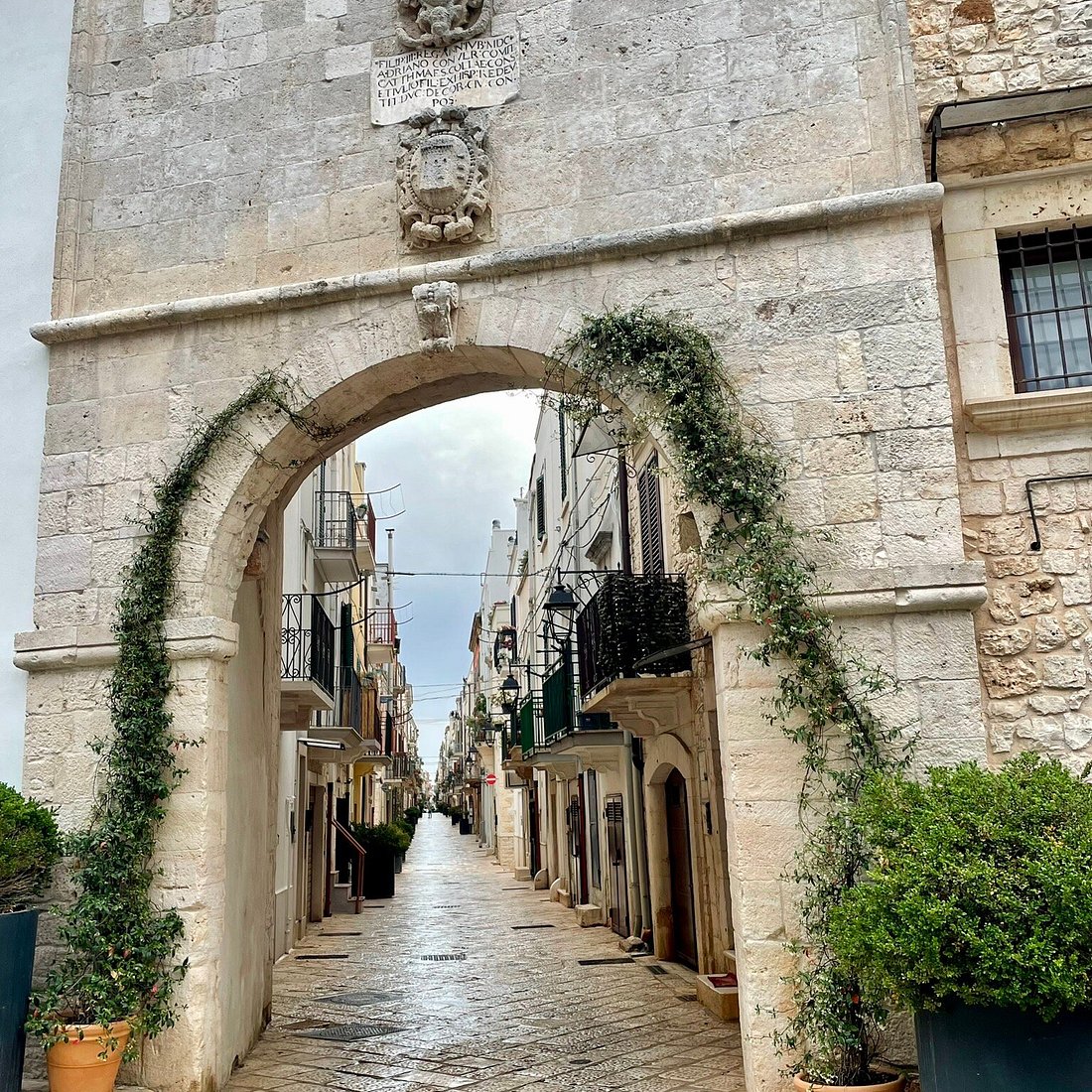
In 1828, with the construction of the new “Mediterranea” road, the gate was demolished to facilitate the connection with Rutigliano and Castellana. However, in order not to lose the memory of this important passage, the coat of arms and the relief were preserved and displayed on the wall of the building opposite the castle, where they still remain today.
Today, the Ancient Gate no longer exists, but its memory lives on in the stones and decorations that tell its story: a vanished threshold that continues to shape the urban identity of Conversano.
Perché visitare queste testimonianze
The megalithic walls and the Ancient Gate are tangible traces of the long and complex evolution of Conversano. Walking among these remains means entering into dialogue with over two thousand years of history, where every stone tells of an era, a function, a meaning.
They are not just places to observe: they are spaces to rediscover, where the past meets the present in the heart of the town.
It will be a journey through ancient silences and memories of stone, to be experienced with curious eyes and an open mind.